
Jump to: Compare Machines vs. Packs | Ready to Buy? | Best Practices
Recovering from knee replacement surgery isn’t easy. The swelling and discomfort in those first few weeks can make even simple movements challenging. I found that one of the most effective tools for easing that recovery process is cold therapy—and while ice packs have long been the go-to, modern cooling machines take recovery to a whole new level.
Cold therapy isn’t just about comfort—it’s about improving your ability to recover. By reducing swelling, you allow the knee to bend and move more freely. That mobility is critical because it helps you stick to your physical therapy routine, which ultimately determines how quickly and fully you regain function.
Doctors often recommend frequent cold therapy sessions, particularly in the first two weeks post-op. Patients who use cooling machines consistently often report needing less pain medication and experiencing fewer setbacks in mobility.
When I started using a cooling machine, the difference was night and day. Not only did it keep pain under control, but it also helped reduce swelling in a way that made daily rehab exercises far more manageable. That combination—less pain and greater mobility—set the stage for a smoother recovery journey.
Cooling Machines vs. Ice Packs: Which Works Best?
If you’re wondering whether cold therapy helps after knee replacement, the answer is yes—absolutely. Applying cold reduces swelling and inflammation by constricting blood vessels, which makes the joint feel less stiff and more mobile. The real question is how you deliver the cold.
Cooling machines (also called cryotherapy machines or cold therapy systems) provide a consistent, long-lasting flow of chilled water around the knee. This steady cooling is more effective than standard ice packs, which warm up quickly and need frequent changing. For someone recovering from major surgery, that reliability can be a game changer.
Ice packs or ice wraps still work, and they’re a good budget-friendly backup option. They can ease pain and swelling, especially if used correctly with a barrier to protect the skin. However, they don’t match the sustained and controlled relief of a cooling machine.
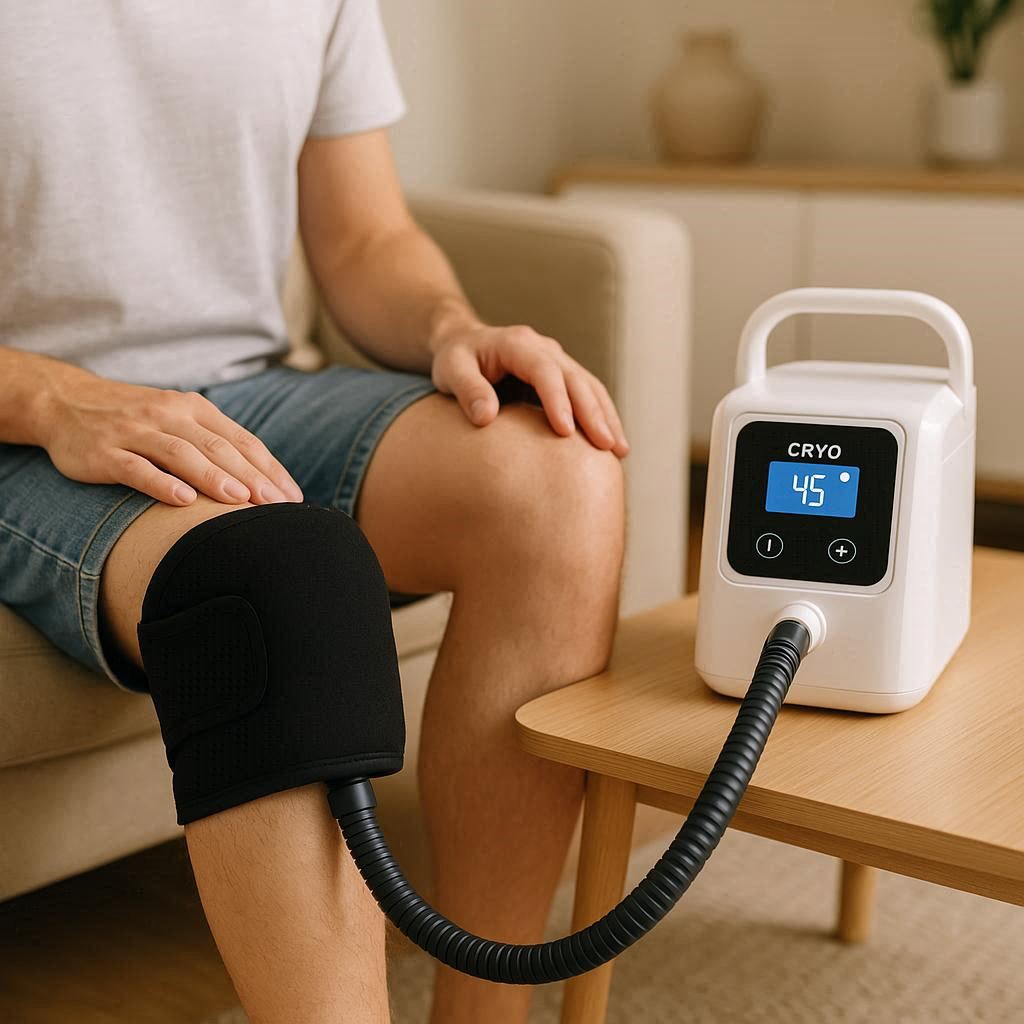
In short, if you can invest in a cooling machine, it will likely become your most valuable recovery tool. Ice wraps remain a solid alternative when cost is a concern, or as a portable option for times when the machine isn’t convenient.
We may earn a commission on qualifying purchases at no extra cost to you.


Best Practices for Cold Therapy
Always consider safety. If you choose an ice wrap instead of a machine, these guidelines are especially important since the cold isn’t as controlled. With a machine, you get the benefit of regulated temperature and duration, making it easier to stay consistent without worry.
Duration: Apply ice wraps for a maximum of 15–20 minutes per session.
Protection: Always use a barrier between your skin and an ice wrap to avoid frostbite.
Circulation: Make sure wraps or cuffs are snug but not overly tight.
Rest periods: Allow the skin to warm up between sessions, typically at least 2 hours.
The Bottom Line
Managing pain and swelling after knee replacement is key to a successful recovery. While ice packs and wraps can help, a cooling machine provides superior, consistent relief that supports faster healing and greater comfort.
If your budget allows, investing in a cooling machine is one of the smartest decisions you can make for your recovery. If not, ice wraps are still a reliable and effective alternative—as long as you use them properly.
Either way, prioritizing cold therapy will make a noticeable difference, giving your knee the best chance to heal smoothly and efficiently.
Click here to return to Knee Replacement Recovery Tips